Fluxy - Repacks

In the ever-evolving world of software distribution, a new trend has emerged: Fluxy Repacks. This phenomenon has been gaining traction among developers, users, and organizations alike, but what exactly are Fluxy Repacks, and how do they work? In this article, we’ll delve into the world of Fluxy Repacks, exploring their benefits, risks, and implications for the software industry.

Fluxy Repacks have emerged as a game-changer in the software industry, offering a flexible, efficient, and cost-effective way to distribute and consume software. While there are risks and challenges associated with their use, the benefits of Fluxy Repacks are undeniable. As the industry continues to evolve, it’s essential to prioritize security, compatibility, and intellectual property concerns to ensure the safe and effective use of Fluxy Repacks. By doing so, we can unlock the full potential of Fluxy Repacks and drive innovation in the software industry. Fluxy Repacks

The Fluxy Repacks Phenomenon: Understanding the Benefits and Risks** In the ever-evolving world of software distribution, a

Fluxy Repacks have filled this gap by providing a convenient and efficient way to re-package software for various use cases. By leveraging advanced packaging technologies and automation tools, developers can create customized software distributions that cater to specific user requirements. Fluxy Repacks have emerged as a game-changer in

Blog archive

in all categories

Latest articles

leadPicture

weather international

Current sea ice extent in the Antarctic and Arctic

The low point of summer sea ice extent is typically reached in the Antarctic between mid- and late February, while the winter maximum is reached in the Arctic in March with a slight delay. Conversely, the lowest sea ice extent is recorded in the Arctic in mid-September, while the greatest extent is recorded in the Antarctic. Currently, we are experiencing the lowest level of global sea ice extent on record.

Michael Eichmann

Most read articles last 2 months

Most read articles last 12 months

leadPicture

astro international

Summer in the calendar from tomorrow!

Following the meteorological start of summer on June 1 and the even earlier phenological start of summer, summer in the Earth's northern hemisphere will now also begin tomorrow, Saturday, June 21, at exactly 4:41 a.m. in calendar and astronomical terms. This is also known as the summer solstice, as the sun is positioned vertically above the Tropic of Cancer. This is associated with the longest day and shortest night in the northern hemisphere, and from this point onwards the length of the day decreases again.

Roger Perret

leadPicture

weather international

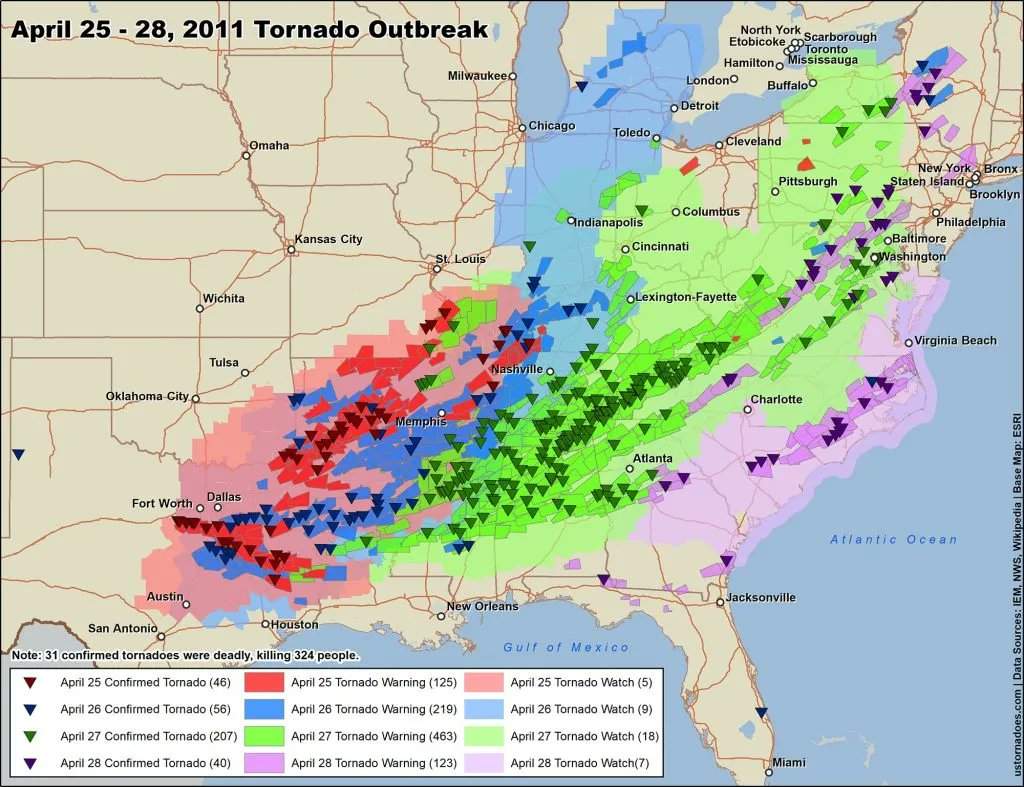
The 2011 Super-Outbreak

Particularly during spring and early summer, severe storms with tornadoes form in North America on a more or less regular basis. While most of these events "only" produce a handful of tornadoes, extreme events can occur if the pressure distribution, wind shear and humidity are ideal for the storms. The most devastating and very deadly tornado outbreak to date occurred between April 25 and 28, 2011, when 362 tornadoes formed within 4 days!

Michael Eichmann

Quick access to our weather portal

Reach our weather portal even faster by placing a shortcut directly on your home screen:
  • 1. Tap
  • 2. To the home screen
  • 1. Tap
  • 2. Tap 'Add to Home screen'
  • 3. tap 'Add'
  • 1. Tap
  • 2. Tap 'Add to Home screen'
  • 3. tap 'Add'