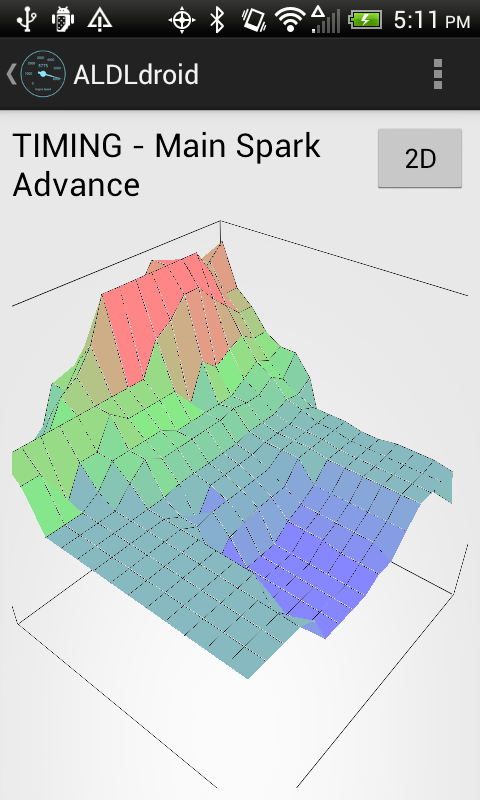
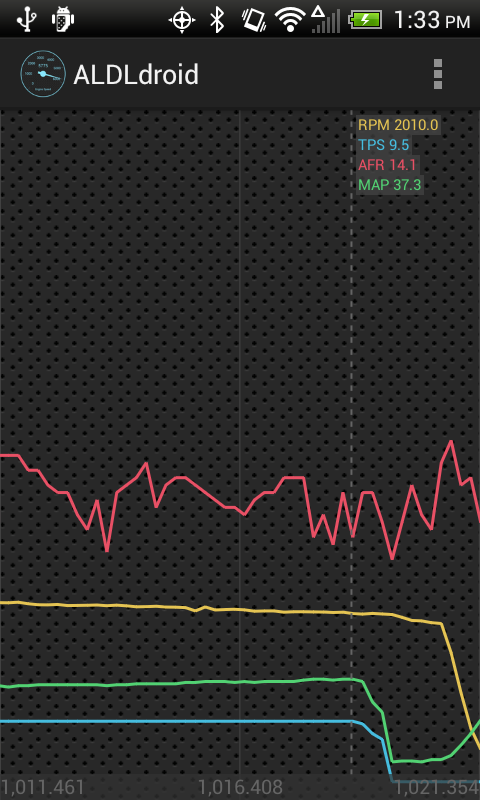
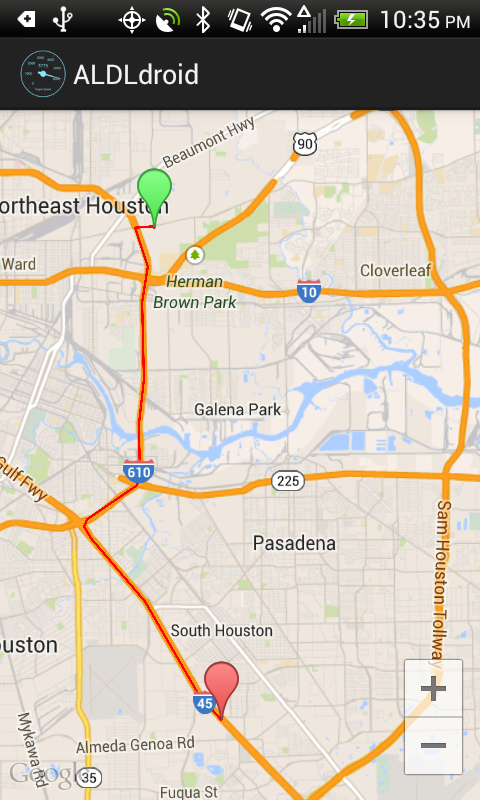
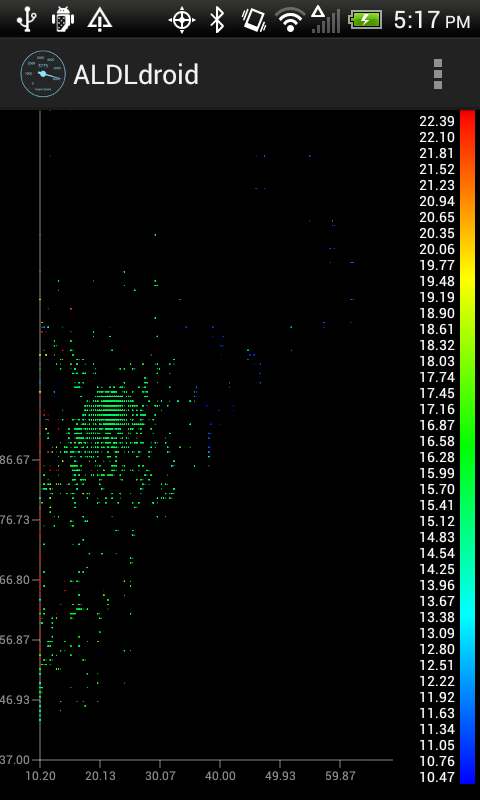
While the application was first developed for GM OBD-I ECUs, it uses a very flexible way of parsing ECU data stream that has proven useful to a lot of other car enthusiasts such as owners of BMW, Ford, DSM (Mitsubishi), Porsche, etc. The application also includes a complete tuning interface as well as data log file viewers which are in the form of time series, maps and scatter plots.
Learn More Download NowThe application has three big components: dashboards where data coming from the ECU can be displayed in various formats, a tuning section and data log file viewers.
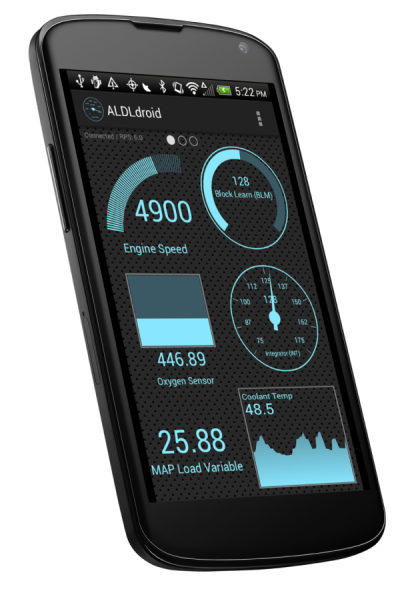
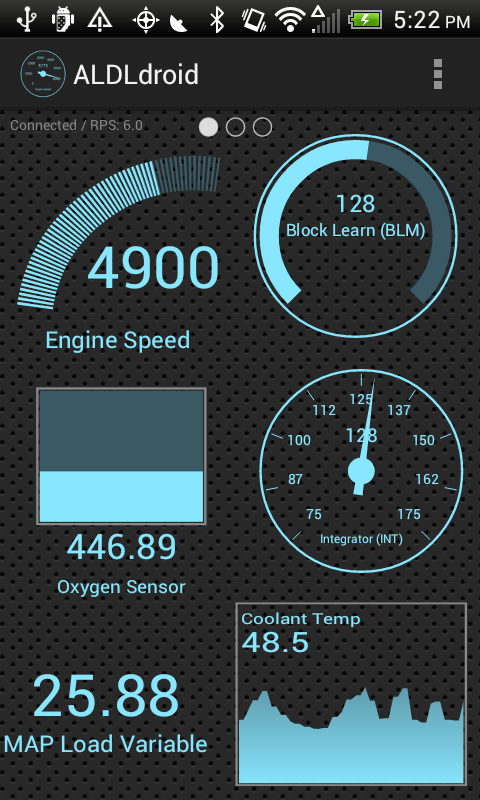
Customize the dashboards with any indicators you want to see
Android sensors on your device are used to display useful GPS geolocation data (including speed) as well as triple axis accelerometer data (including g-force)
Display the app in your windshield to see it at a glance
Look at the data you just data logged on your phone or tablet using the build-in time series, maps or scatter plot log viewers
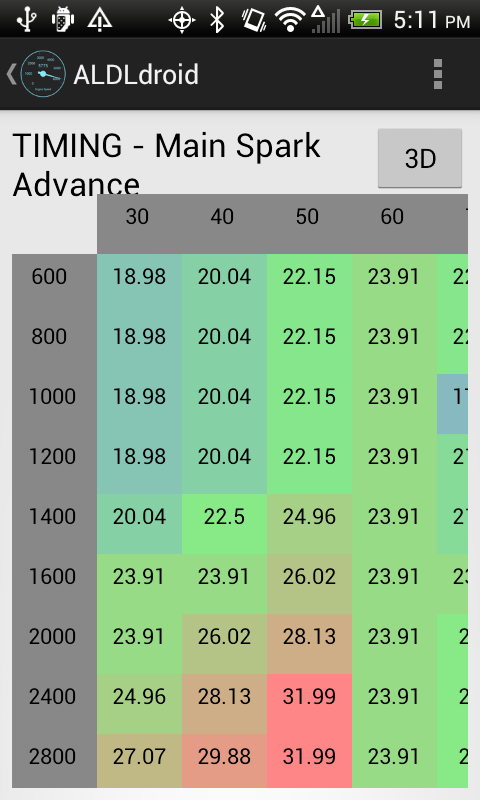
Tune on the fly using supported real-time tuning hardware or edit a binary file to program a chip later
We try to answer email from our customers as fast as we can, more often than not, we will answer within 24 hours
The application uses ADX and XDF files which are files from TunerPro (Windows software). These files can be found on various sites such as TunerPro Web site itself, GearHead EFI forums as well as your cars enthusiasts forums related to your specific vehicle.
Here is the easy steps that you can follow that will get you going
Find the ADX file for your vehicle. This is often the hardest part. Once your've found it, the rest is easy!
Install the ALDLdroid application from Google Play
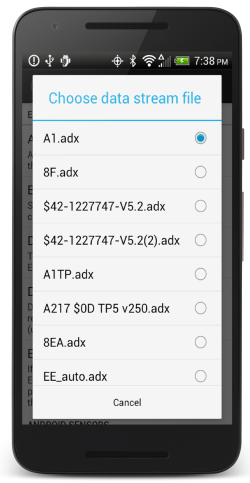
Use the Import Data stream feature of the application to import your ADX file.
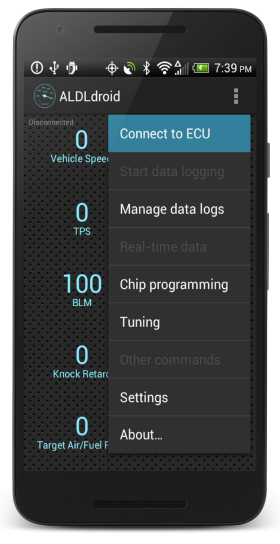
Connect the ALDL cable to your vehicle diagnostic port. Hit the Connect to ECU menu in the application and watch the data come in!
The application supports various hardware that can be wired or connected wirelessly to your Android device. Here is what is currently supported:
Wired connection (USB) and wireless (Bluetooth) are both supported by the app. For Bluetooth, we suggest the Red Devil River adapters (or the 1320 electronics if you can find one used) and for USB, any FTDI (USB chip) based cable will do. :obd2allinone should have what you need.
It is possible to program chip for your ECU using the Moates BURN1 (discontinued), BURN2 as well as AutoProm.
For real-time tuning, the application currently support the Moates hardware as well. That is the Ostrich as well as the AutoProm.
If you ECU is equipped with an NVRAM module for real-time tuning, that is also supported for some ECU. Mainly Australian ECUs at this point and more can be added as required.
Some of the features described above can be seen on the screenshots below.
We love to see what our customers do with our application so here a video of Boosted & Built Garage and his pretty awesome setup.
In the early 2000s, Hooverphonic began to experiment with new sounds and styles. Their third album, , was released in 2002 and featured a more rock-influenced sound. The album was well-received by critics and fans, and featured the hit single “The Perfect Day.”
Hooverphonic is a Belgian electronic music band that has been active since 1995. The group, led by Geike Arie and Stef Kamil Carlens, has released a diverse range of music that blends elements of lounge music, jazz, and electronic dance music. Over the years, Hooverphonic has built a loyal fan base and has released a substantial discography that showcases their unique sound. In this article, we will take a comprehensive look at the Hooverphonic discography, covering their studio albums, live albums, singles, and compilations. hooverphonic discography
In the 2010s, Hooverphonic continued to release new music and tour extensively. Their fifth album, , was released in 2010 and featured the hit single “Bumpy Ride.” The band’s sixth album, A Balthazar’s Opium , was released in 2015 and marked a new era of creativity and experimentation. In the early 2000s, Hooverphonic began to experiment
Hooverphonic was formed in 1995 by Geike Arie, Stef Kamil Carlens, and Patrick Gemayel. The band’s early sound was characterized by their blend of lounge music and electronic dance music. Their debut album, , was released in 1996 to critical acclaim. The album featured the hit single “2Wicky,” which became a staple of the electronic music scene. The group, led by Geike Arie and Stef
Hooverphonic’s discography is a testament to their creativity and versatility as a band. From their early days as a lounge music outfit to their current status as electronic music pioneers, Hooverphonic has consistently pushed the boundaries of what is possible with electronic music. With a loyal fan base and a string of critically-acclaimed albums, Hooverphonic continues to be one of the most exciting and innovative bands in the electronic music scene.
Hooverphonic’s fourth album, , was released in 2006 and marked a return to their earlier lounge music sound. The album featured the hit single “The Human Abstract,” which showcased the band’s ability to craft catchy and sophisticated pop songs.
Hooverphonic’s second album, , was released in 1998 and marked a significant turning point in the band’s career. The album featured the hit single “Mad About You,” which received widespread airplay and helped establish Hooverphonic as a major force in the electronic music world.
Subscribe to our email newsletter for useful tips and resources.
Copyright 2026 ALDLdroid. All Rights Reserved.