The people of Ukraine continue to defend their Independence against the armed forces of Russian Federation.
They started to bomb our cities without warning, their soldiers intruded from north, east, and south. None of Ukraine's citizens wanted war, few were ready for it, but we will stand for our freedom to the last.
We are eternally grateful to our fans, friends and colleagues who’ve already joined the common cause of stopping Russian aggression.
We are happy to be a part of such a united community.
But yet the war is not over, and the enemy is not stopping. Right now our families and friends are either trying to find shelter from bombings or are actively assisting those who has already suffered from the occupants.
We need all the help we can get.
UNITED24
A charitable fundraising platform launched by the President of Ukraine.
Through pain, death, war, fear and inhuman cruelty, Ukraine will persevere.
As it always does!
20 years of experience
Numerous award-winning titles
Eagerly anticipated comeback
Leading East European developer
Founded in 1995, GSC Game World has become the most renowned game development studio in Ukraine and a leading developer in Europe. Since 2004 the proprietary worldwide publishing branch has been operating within the company.
The revolutionary Cossacks: European Wars RTS title became the company's first hit, selling, along with its two add-ons, over 5 million copies worldwide.
In 2004 the studio enjoyed its first experience of working on a Hollywood movie license, while developing the tie-in RTS based on Oliver Stone's blockbuster film Alexander. The game was released simultaneously with the movie and was self-published by GSC in former USSR territories.
Since August 2004, GSC World Publishing has launched 7 projects: Alexander (2004), Cossacks 2: Napoleonic Wars (2005), Cossacks 2: Battle for Europe (2006), Heroes of Annihilated Empires (2006), S.T.A.L.K.E.R.: Shadow of Chernobyl (2007), S.T.A.L.K.E.R.: Clear Sky (2008), S.T.A.L.K.E.R.: Call of Pripyat (2009).
In April 2007 the company's most ambitious project - Survival FPS S.T.A.L.K.E.R.: Shadow of Chernobyl, set in the near-future Chornobyl exclusion zone, was released worldwide. GSC World Publishing was in charge of publishing the title in former USSR territories, while THQ Inc. operated the worldwide release.
The game received numerous awards at some of the biggest international trade shows, and received high critical acclaimed from both print and online media and from the players themselves. The success of the game has been proven not only by the 'Game of the Year' and 'Most Atmospheric Shooter' awards, but also by maintaining top spots on sales charts.
In the former USSR states alone, the game sold over half a million copies in the first two weeks. With the two subsequently released add-ons, the worldwide sales of the S.T.A.L.K.E.R. game series approach five million copies to-date.
Following the strategy of further brand development, GSC Game World initiated a series of S.T.A.L.K.E.R.-based novels (published in Russian and German), and have sold over 5 million copies overall.
Cossacks 3, released in September 2016, put furious battles of XVII-XVIII centuries into 3D.
Whether seen as a symbol of the human condition, a tool for personal growth, or a metaphor for complex systems, the Labyrinth of Estras remains a profound and enduring enigma, inspiring us to explore, to discover, and to grow.
In modern times, the Labyrinth of Estras has been associated with various fields, including psychology, philosophy, and spirituality. It has been used as a tool for personal growth, helping individuals to confront their fears, overcome obstacles, and find their inner strength. The Labyrinth of Estras is often depicted as a circular or spiral structure, with a single path that winds its way through a series of concentric rings or chambers. The path is typically narrow and winding, with dead ends, turns, and obstacles that require the navigator to adapt and make choices.
The Labyrinth of Estras: Unraveling the Mysteries of a Timeless EnigmaThe Labyrinth of Estras is a term that has been shrouded in mystery for centuries. It is a concept that has fascinated scholars, philosophers, and enthusiasts alike, sparking intense debate and speculation about its meaning and significance. In this article, we will embark on a journey to unravel the mysteries of the Labyrinth of Estras, exploring its origins, symbolism, and relevance to modern times. The Labyrinth of Estras is believed to have originated in ancient Greece, where it was associated with the myth of the Minotaur and the legendary architect Daedalus. According to myth, the Labyrinth was a complex maze designed by Daedalus to confine the Minotaur, a creature that was half-man and half-bull. The Labyrinth was said to be so intricate that anyone who entered it would become lost forever, unable to find their way out. Symbolism and Interpretations Over time, the Labyrinth of Estras has been interpreted in various ways, reflecting the cultural, philosophical, and spiritual contexts of different eras. Some see the Labyrinth as a symbol of the human condition, representing the complexities and challenges of life. Others view it as a metaphor for the journey of self-discovery, where one must navigate through the twists and turns of the Labyrinth to reach the center, representing enlightenment or spiritual awakening.
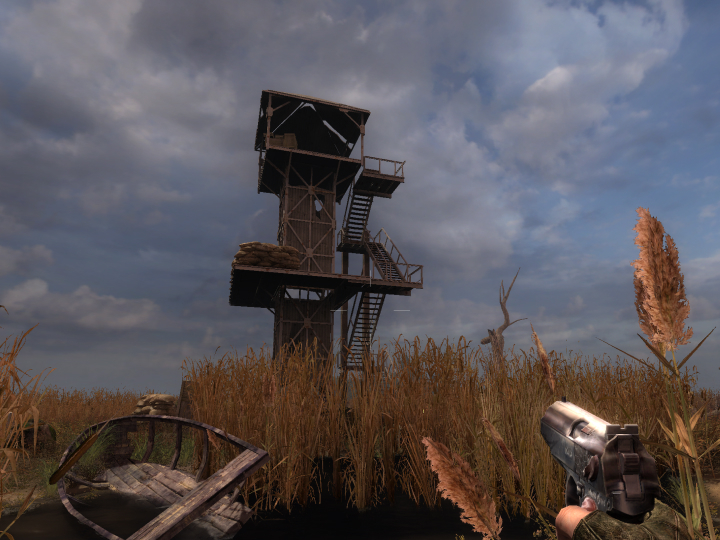
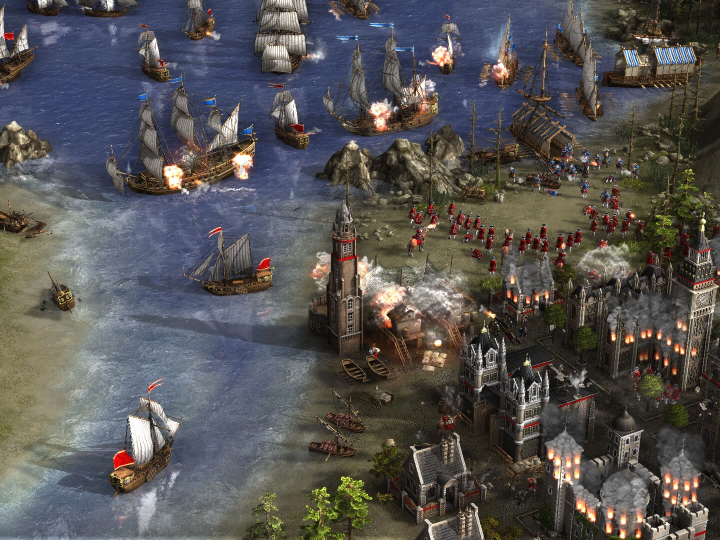
Leaning on the history of the 17th and 18th centuries. Real-time strategy game awakens colossal mass battles with up to 32,000 units at one time on the battlefield. 12 nations, 70 different unit types, 100 research opportunities, and over 140 different historical buildings are available. Besides the battles on land, players can build the greatest armadas and attack their enemies at sea.
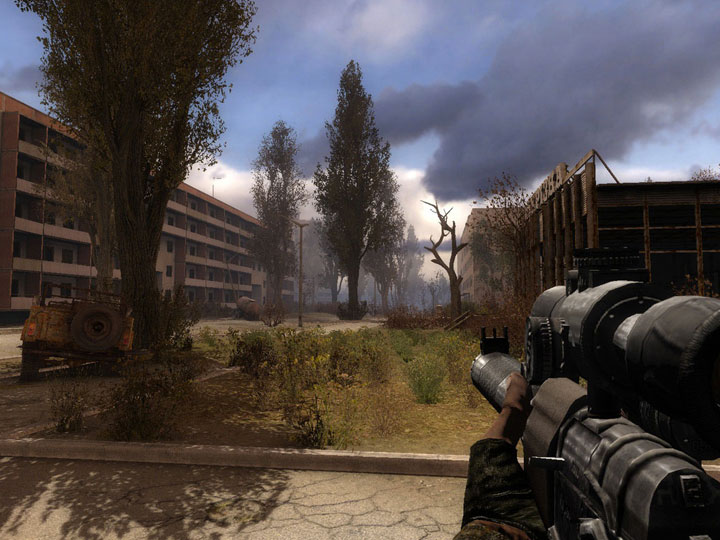
The events of S.T.A.L.K.E.R.: Call of Pripyat unfold shortly after the end of S.T.A.L.K.E.R.: Shadow of Chernobyl. Having discovered an open path to the Zone center, the government decides to hold a large-scale military Fairway operation aimed at taking the CNPP under control.
According to the operation's plan, the first military group is to conduct an air scouting mission of the territory to map out the detailed layouts of anomalous fields location. Thereafter, making use of the maps, the main military forces are to be dispatched.
Despite thorough preparations, the operation fails. Most of the avant-garde helicopters crash. In order to collect information on why the operation failed, Ukraine's Security Service send their agent into the Zone center. From now on everything depends on the player.
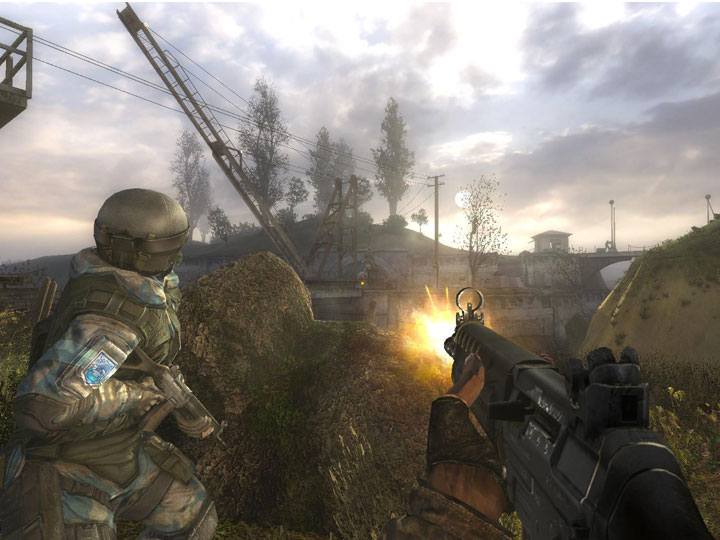
Year: 2011. Five years passed since the Second Disaster, which eclipsed the events of April 1986. The Zone is shaken by frequent and powerful blowouts, which move anomaly fields, opening new routes to previously inaccessible locations. Stalker factions fight for the new territories and key points. A lot of stalkers die, but newbies keep on arriving.
The action takes place one year prior to the events of S.T.A.L.K.E.R.: Shadow of Chernobyl, one year before Strelok's most successful trip to the center of the Zone - the third one. We will learn about Strelok and his squad from another character's vantage point.
The Zone is waiting for you ahead, new locations and unknown threats, spatial holes and monsters hiding in the fog, pitch-black nights and saving rays of a rising sun. Try to avoid anomalies and hide from blowouts, discover the Zone and collect artifacts, cure radioactive irradiation and fight for any stalker faction you like! Only then will you uncover the truth about Strelok and how he happened to get inside the death track and receive the S.T.A.L.K.E.R. tattoo on his arm.
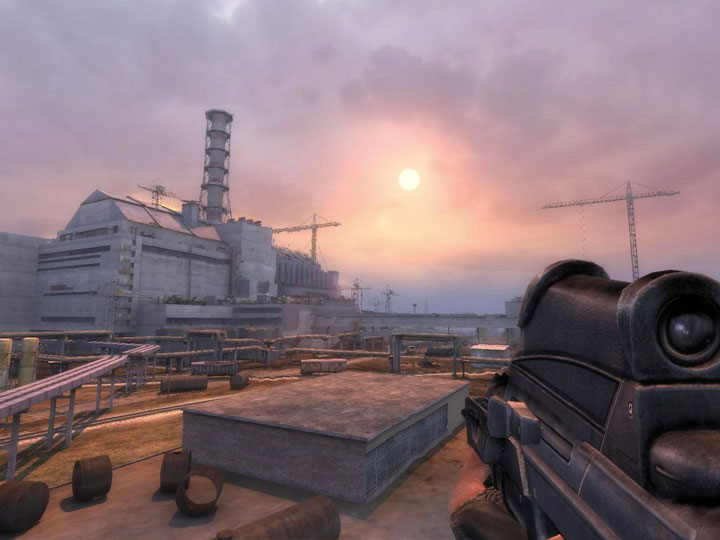
Year: 2012. Six years passed since the time of the Second catastrophe to have made the April events of 1986 fade.
The game is set in the Chornobyl exclusion zone which turned from a destiny-breaker place into a threat to all mankind. The Zone is reluctant to open up its mysteries and needs to be forced to do so. Only a rare hero can reach the very heart of the Zone and find out what danger awaits him there.
A danger which, compared to marauders and enemy groupings, all monsters and anomalies, will seem as a mere preparation for a meeting with something more fatal and threatening.
But for now... get ready, hero. Collect artefacts and trade, grope your path and keep an eye on what is going on behind you, catch x-rays and fight - only make sure you survive! And then, perhaps, if you are persistent and truly lucky, you will find out why all this had fallen on you.
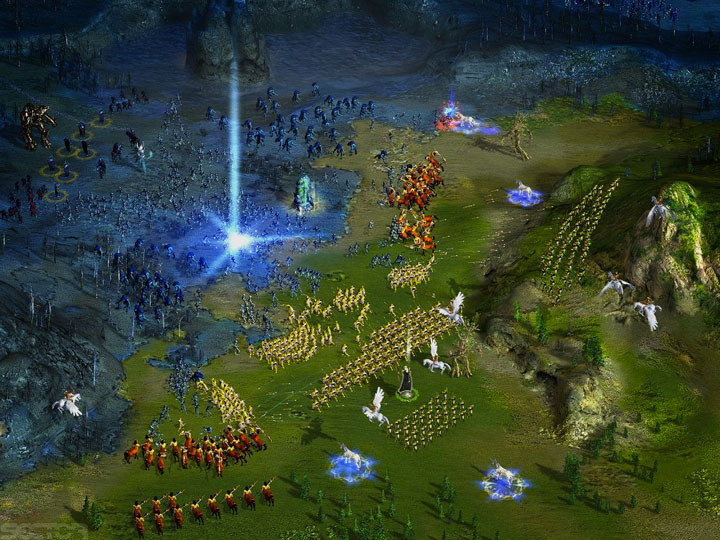
Did you ever wonder where legends, sagas and characters like elves, gnomes, dragons and mages - the races and creatures we typically refer to as fictional fantasy archetypes - come from? As we say - There is no smoke without fire. If any gossip and writings get spread around, there must be some link between what was imagined and reality. Even an authentically candid lie or skillfully disguised fiction bears links with true to life events.
We are breaking the seal on the door to myths and legends; the entrance to a world where magic was commonplace, the gateway to Empires long ago extinct. The memories of them were methodically erased from the public consciousness, and have remained in oblivion for ages. Now, the time has come to take a step through that door leading to a distant reality where mysterious people lived and their societies where lived heroes keen on defending their lands until the last drop of blood. You will find the truth about what happened to that ancient world of magic and why our knowledge of it is so scanty. The game Heroes of Annihilated Empires is the key to that world's door.
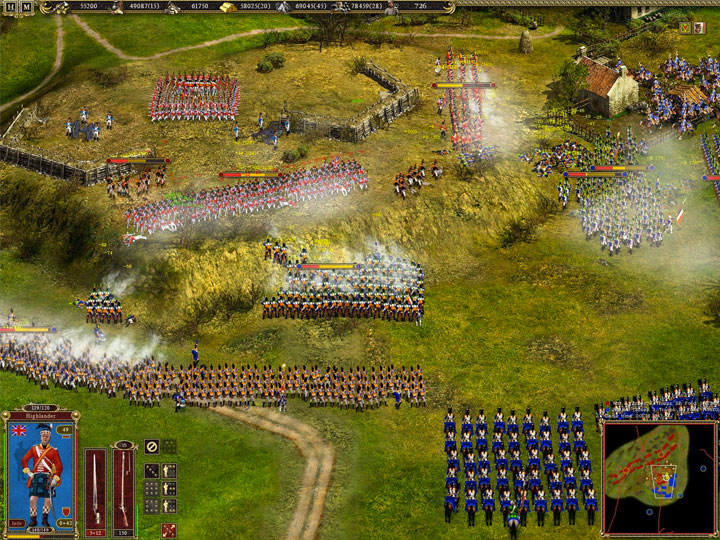
Let the battle begin! The Cossacks II: Battle for Europe add-on continues the renowned Cossacks II:Napoleonic Wars game. It depicts the rather short historic period of the Napoleonic wars. The Napoleon wars changed Europe forever, leading to the formation of empires and putting an end to almost one thousand years of constant strife between small states. The game provides mass-scale battles between nations involved in conflicts during this period whose armies numbered in the thousands. The theatres of operation introduce France, Britain, Austria, Russia, Prussia, Egypt, and three nations not represented in the original game - Spain, the Grand Duchy of Warsaw (Poland), and the Confederation of the Rhine.
Cossacks II: Battle for Europe reconstructs in detail the soldiers' uniforms, weapons and architecture of each nation. Each nation's army has its unique units and possibilities. The game includes over 180 units 190 buildings and 1200 flora and fauna elements. When developing the combat system the peculiarities of early 19th century warring were taken into account as was the value of formations provisions and troop morale. Tactical tricks utilized by military commanders of the time are fully reflected in the game. An honest system of bullet and cannonball ballistics based on physics is an innovative addition to the Cossacks engine. Other engine features include 3-dimensional landscaping which creates realistic-looking scenery and towns which impact combat tactics. For example the firing range of a subdivision of soldiers or a cannon positioned at the top of a hill is greater than the firing range of a unit stationed on flat terrain.
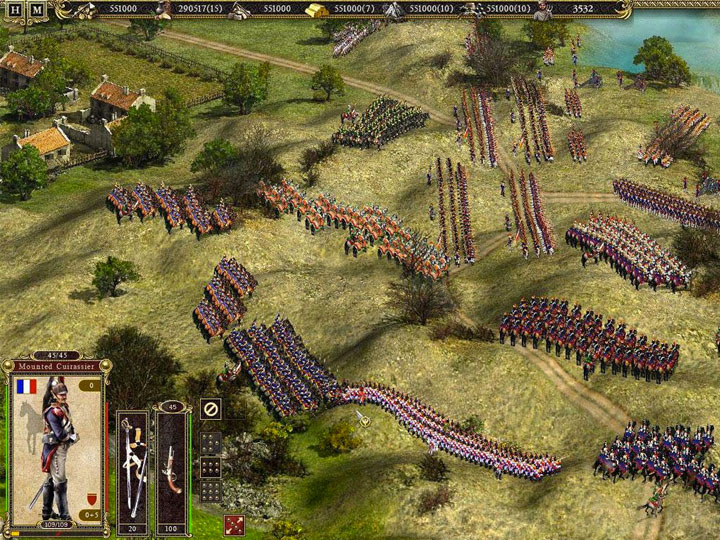
In Cossacks II: Napoleonic Wars , lead your 19th century army to glory in this much-anticipated sequel to the internationally acclaimed Cossacks: European Wars. Whether fighting as Napoleon's highly disciplined Grand Arme, the tenacious Russians and their Cossack horseback warriors, the Austrians, Britons, Prussians, or Egyptians, the challenges will be daunting as you master weapons and tactics during a time that redefined modern warfare.
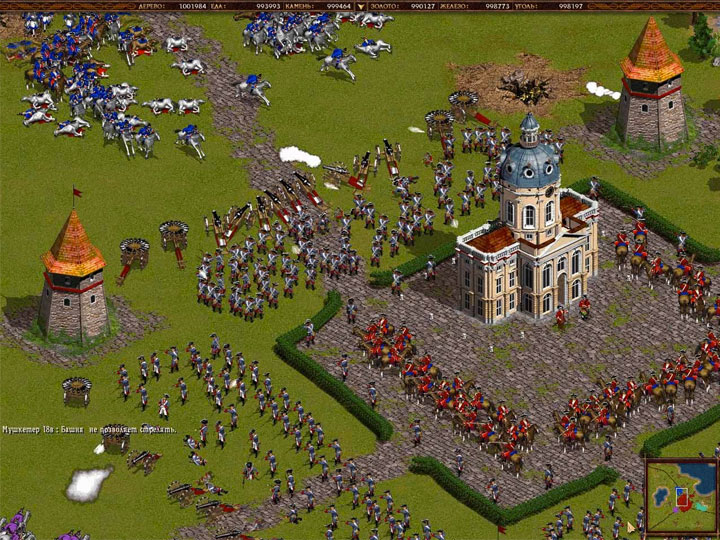
Standing alone in war is extremely unpleasant. Extremely pleasant, on the other hand, is the stand-alone version Cossacks: Back to War. Containing all of the gameplay features of Cossacks: European Wars and Cossacks: The Art of War, this is a complete care package for all current and future Cossacks fans. This add-on contains 100 captivating missions taking place between the 16th and 18th centuries. In addition, two new nations, Switzerland and Hungary, are included. These countries waged war in the late Middle Ages and essentially influenced the development of European military strategies. This addition causes the second add-on of Cossacks to pass the threshold of allowed gaming fun.
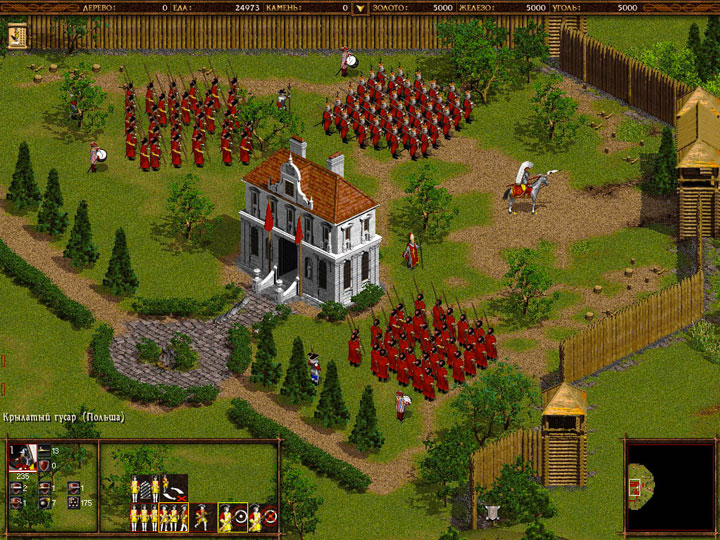
Cossacks: The Art of War is a historical real-time strategy game, based on European history of the XVII-XVIII centuries. This period is famous as an epoch of continuous wars and battles - and these battles are the focus of attention in the game.
The 30 Years' War, 7 Years' War, War of the Austrian Succession, Russo-Turkish Wars, English Civil War, Turkish expansion in Europe, Ukrainian Liberation War, Northern War, Polish-Russian war and much more awaits you in this add-on to the original Cossacks game.
Cossacks: The Art of War - continues the history of the great battles of XVII-XVIII centuries, and introduces five new campaigns, two nations, some new units and much more.
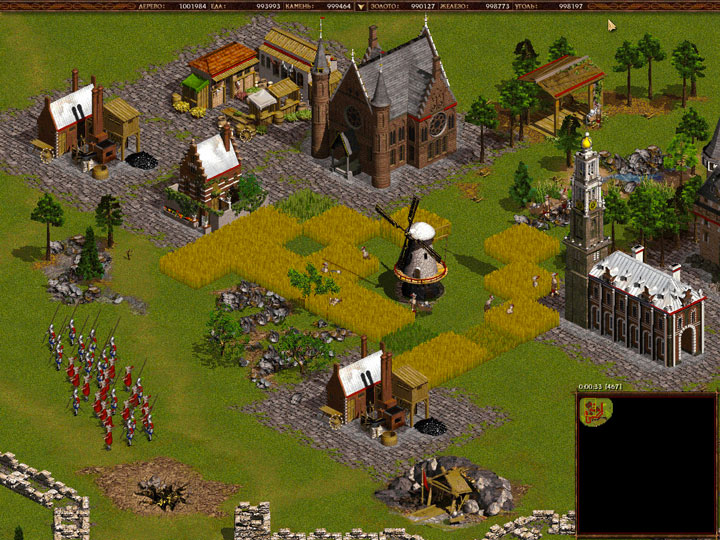
Cossacks: European Wars is a historical real-time strategy based on events of the 16th through the 18th centuries in Europe, when nations and states were created and demolished, and wars shed seas of blood.
There are 16 nations or regions in Cossacks: Algeria, Austria, England, France, the Netherlands, Piemonte, Poland, Portugal, Prussia, Russia, Saxony, Spain, Sweden, Turkey, Ukraine, and Venice. Each has its own original graphics, economic and technical development peculiarities, military advantages and drawbacks, as ell as unique units and technologies, providing vast choices of tactics and strategy in war against any enemy. Thus, England is the mightiest sea power, Austria has powerful light and heavy cavalry, and Cossacks are the pride of the Ukrainian army.
Battles of up to 8,000 units may be conducted on single or network game maps. One can carry out lingering city sieges, wage guerilla wars, capture commanding heights, arrange ambushes, deploy landing forces on enemy shores, and wage sea battles. The game system is arranged to reduce per-unit control and resource micromanagement, and to turn to global goals of powerful economy formation, science development, capturing new lands, and defending borders.
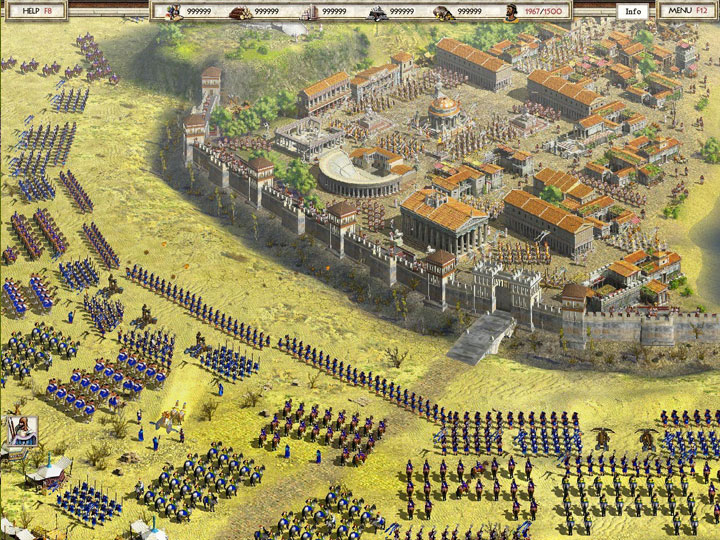
It is 330 BC, and the 3,000 weary military units under your command face a fearsome opposing army numbering in the tens of thousands. You are David to your opponent's Goliath. Even though you have ample resources and a multitude of units, buildings, and advancements on which to spend them - your enemy has more.
Blood will be spilt on thebattlefield and honor will be put to the test, as the courage and cunning of your decisions determine the success of your forces. Command vast armies and heroes from Alexander the Great's era. Triumph in epic real-time battles using formations, morale,and authentic battle tactics.
Become a legendary hero! Alexander was many things to many people - a dashing warrior king, a relentless conqueror, and a visionary who helped shape the face of the world we know today.
Relive the arduous battles and triumphs of history's greatest legend with characters, imagery, and sounds direct from Oliver Stone's blockbuster film.
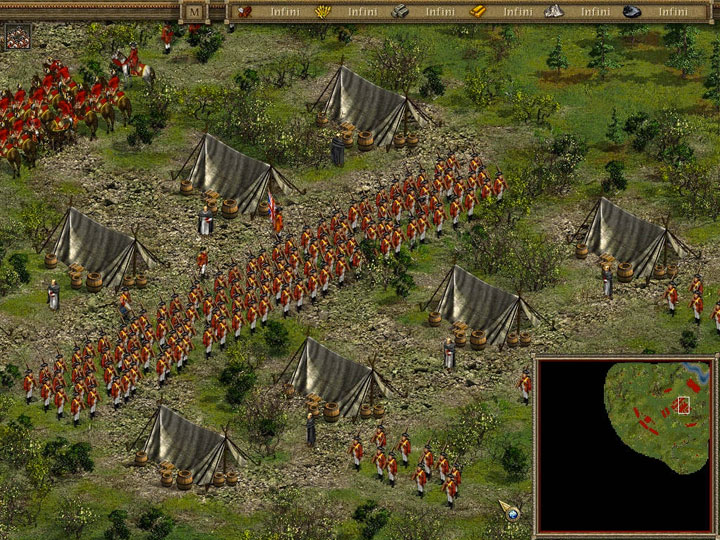
Three centuries of war continue - with even more frantic combat and more desperate power struggles raging across the American continent. The Spanish wage an attack on the Yucatan amidst fierce Mayan and Aztec resistance. The Germans put all their efforts into finding the legendary El Dorado. The Pontiac Uprising ends in a terrifying bloodbath between Native Americans and the British. And the Russians will do anything to conquer Alaska at the cost of the Haida.
There is a fantastic bonus for shrewd strategists: the great new battlefield mode in single-player and multiplayer modes! Tactical skill alone will determine victory or defeat in single-player and multiplayer games. So, plunge into battle!
Whether seen as a symbol of the human condition, a tool for personal growth, or a metaphor for complex systems, the Labyrinth of Estras remains a profound and enduring enigma, inspiring us to explore, to discover, and to grow.
In modern times, the Labyrinth of Estras has been associated with various fields, including psychology, philosophy, and spirituality. It has been used as a tool for personal growth, helping individuals to confront their fears, overcome obstacles, and find their inner strength. The Labyrinth of Estras is often depicted as a circular or spiral structure, with a single path that winds its way through a series of concentric rings or chambers. The path is typically narrow and winding, with dead ends, turns, and obstacles that require the navigator to adapt and make choices.
The Labyrinth of Estras: Unraveling the Mysteries of a Timeless EnigmaThe Labyrinth of Estras is a term that has been shrouded in mystery for centuries. It is a concept that has fascinated scholars, philosophers, and enthusiasts alike, sparking intense debate and speculation about its meaning and significance. In this article, we will embark on a journey to unravel the mysteries of the Labyrinth of Estras, exploring its origins, symbolism, and relevance to modern times. The Labyrinth of Estras is believed to have originated in ancient Greece, where it was associated with the myth of the Minotaur and the legendary architect Daedalus. According to myth, the Labyrinth was a complex maze designed by Daedalus to confine the Minotaur, a creature that was half-man and half-bull. The Labyrinth was said to be so intricate that anyone who entered it would become lost forever, unable to find their way out. Symbolism and Interpretations Over time, the Labyrinth of Estras has been interpreted in various ways, reflecting the cultural, philosophical, and spiritual contexts of different eras. Some see the Labyrinth as a symbol of the human condition, representing the complexities and challenges of life. Others view it as a metaphor for the journey of self-discovery, where one must navigate through the twists and turns of the Labyrinth to reach the center, representing enlightenment or spiritual awakening.
The game is set in the year 2010 where player's conscience is entrapped by an up-to-date virus-infected virtual reality-playing machine called FireStarter. The virus-caused failure resulting in computers changing the rules of the game - to break out of the trap, the player is to complete the game within 48 hours. Immerse in an unbelievable world, created by a super-modern playing machine, where you are to come out a winner of the adrenaline-brimming action...
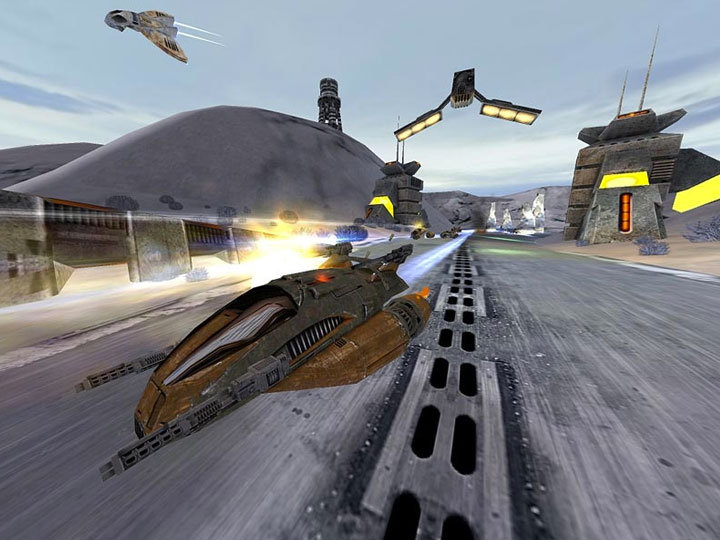
Hover Ace is a battle hovercraft race packed with speeds exceeding 500 km/h, various weapons, equipment, power ups, and gripping gameplay from start to finish. The race takes place in a futuristic, sci-fi environment that features open arena-tracks where the player has the full freedom of movement and can choose from 15 various hovercrafts, each featuring different physics and battle characteristics, to win the race.
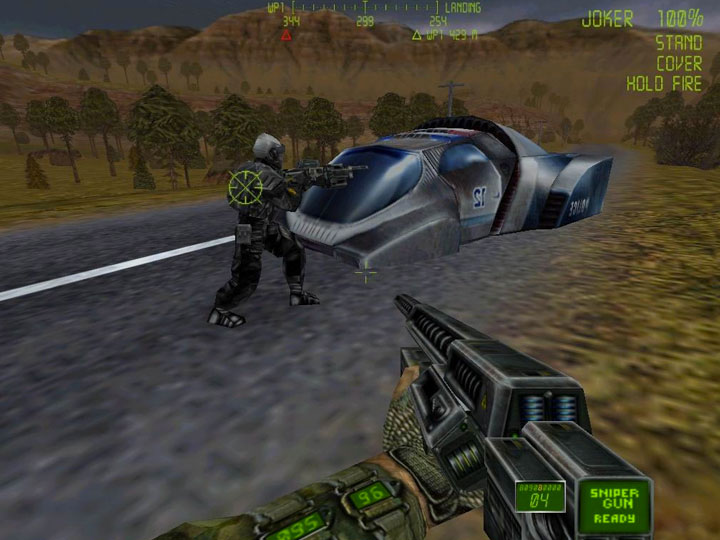
The ancient doom prophecies become true, but not in the way that many have imagined. A bright spot among the seas of stars attracted astronomers' attention. The studies and observations of the object allowed to determine its nature as a class C comet. The first wave of exultation was followed by a surge of panic as the trajectory calculations revealed a high probability of colliding with the Earth. The comet has passed in close vicinity from our planet and singed the atmosphere by its tail, raining a meteorite shower upon the surface, bringing death and devastation. As smoke and cinder eventually cleared away revealing cities in ruins and a scorched planet Earth, people witnessed a Catastrophe...
Hundreds of meteorites poured their fiery rain down delivering alien life spores which started quickly developing under the planet's conditions. Within several days after the catastrophe aliens spread across vast territories and captured many objectives. The game plot describes a military campaign to resist the invasion and the main characters participation in the campaign.
For back-catalogue and licensing inquiries please contact [email protected]
Please address technical support inquiries to [email protected]
If you have any other questions, please feel free to contact us at [email protected] or fill in the form:
Copyright © 2026 Southern Index. All rights reserved.. All rights reserved.
SSL Security  by SSLs.com