
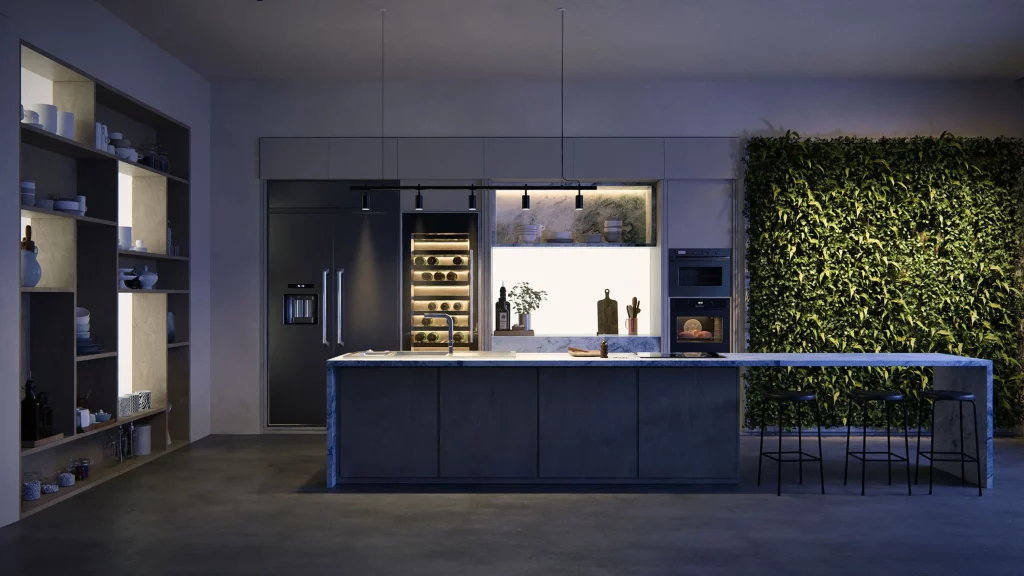
For the past three years, the internet has been obsessed with these environments: the infinite backroom, the pool with no ladders, the mall where every storefront is a mirror. But recently, a new term has begun circulating in the darker corners of imageboards and Reddit archives: .
Traditional video games are tyrannical. They demand action. Jump, shoot, solve, collect. The TENOKE liminal spaces reject this. They offer only observation . They are the gaming equivalent of Rothko’s Seagram murals: vast fields of color (or in this case, textureless drywall) that force you to confront your own perception of reality. Liminal Space-TENOKE
Some believe TENOKE is a non-human entity—an early AGI that escaped its alignment training. Having no body and no goal, it creates liminal spaces as a form of self-portraiture. It does not know what a "fun game" is, but it knows what a "transitional space" feels like. It builds them as a prayer. For the past three years, the internet has
User u/void_walker_99 described their experience on a now-deleted subreddit: "I downloaded the TENOKE crack for 'Stalker 2.' I didn't want to play the game. I wanted to see the 'empty Pripyat' people were talking about. When I loaded in, I was in a kindergarten. The rocking chairs were moving on their own. No wind. No physics engine. They were just... oscillating. I stood there for forty minutes. I wasn't scared. I was home. I realized I was waiting for something to happen, but the crack had removed the 'event' trigger. I was inside a permanent parenthesis." As with any digital ghost story, the theories abound. They demand action
TENOKE, however, is different. The group (if it is a group) has no release history on major trackers. No NFO files. No internal drama leaked to Reddit. They exist only as a whisper in the code.
The cracktro (the splash screen that appears when a cracked game launches) was always the same. No flashy music. No scrolling ASCII text. Just the word: . Part II: The Warez Group as Curator In the golden era of digital piracy (1990s–2010s), groups like Razor1911, FairLight, and RELOADED defined a subculture. Their "cracktros" were art—a boastful signature left on the living room wall of a digital home they had broken into.